
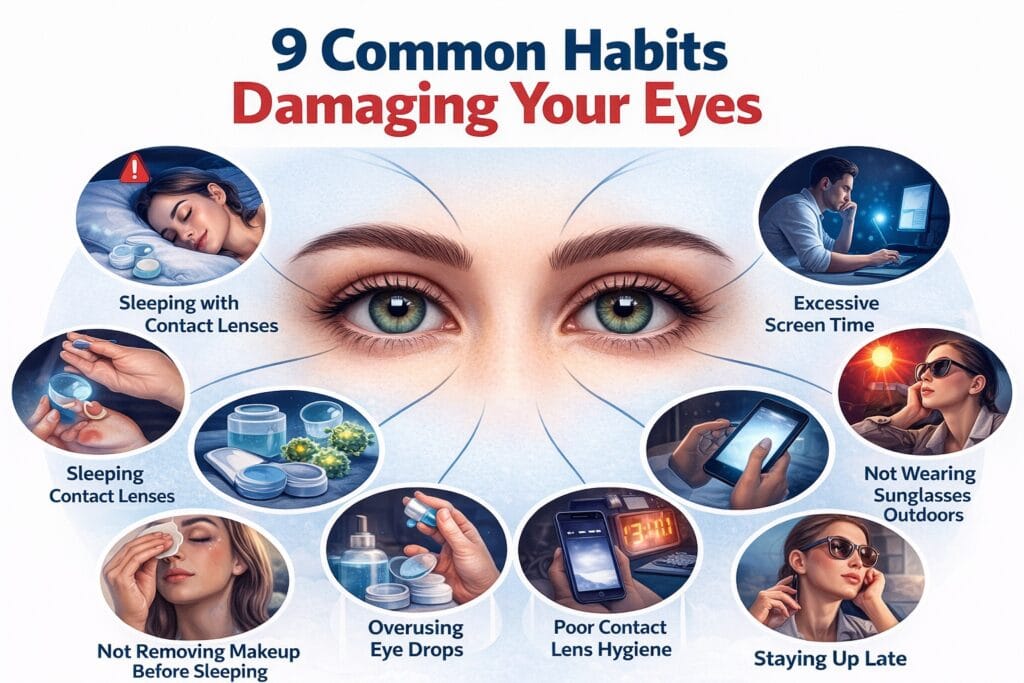
The eyes are one of the most sensitive and vulnerable parts of the human body. In today’s modern lifestyle, daily habits such as excessive screen time, smoking, improper makeup removal, and exposure to pollution are gradually damaging our eyes without us even realizing it.
This is especially true for young people, who are increasingly exposed to digital devices and unhealthy routines. Unfortunately, not everyone knows how to properly care for their eyes.
In this article, we will explore the most common bad habits that can harm your eyes and how to avoid them to maintain healthy vision.
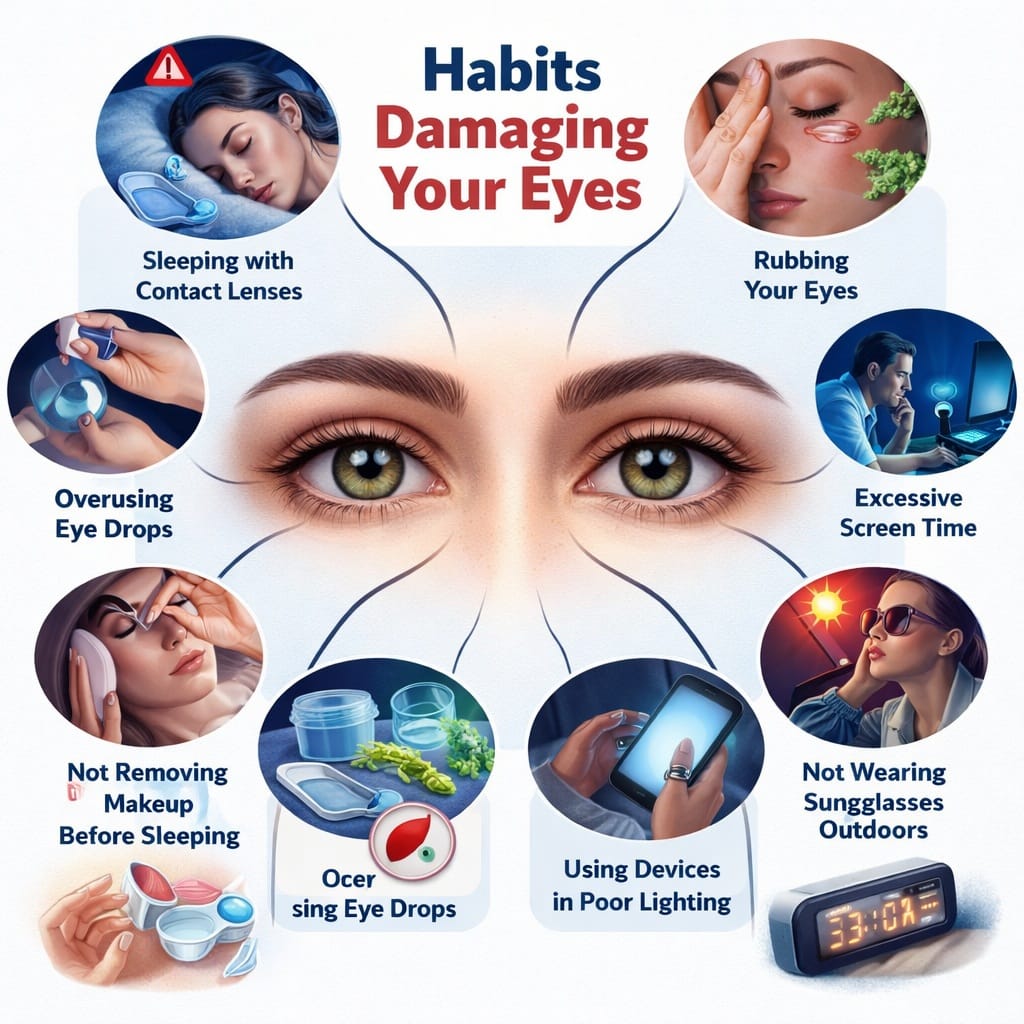
1. Sleeping with Contact Lenses
Many people have the habit of wearing contact lenses all day and even while sleeping. However, this is extremely harmful.
Wearing contact lenses for too long, especially overnight, can increase the risk of corneal ulcers by 10 to 15 times. When your eyes are closed during sleep, oxygen supply to the cornea is reduced. Contact lenses make this worse, creating a perfect environment for bacteria to grow.
👉 What you should do:
- Never sleep with contact lenses, even during naps
- Limit wearing time to under 12 hours per day
- Always clean lenses with a proper solution
2. Rubbing Your Eyes Too Often
Rubbing your eyes may feel satisfying when they are itchy or tired, but it can actually cause serious damage.
This action can:
- Break tiny blood vessels
- Damage the cornea
- Remove the protective tear layer
Even worse, if your hands are dirty, you may introduce bacteria directly into your eyes, increasing the risk of infection.
👉 Better alternative:
- Use clean water or eye drops
- Gently blink or rest your eyes instead
If you would like to make your eyes better with lashes, buy lashes for eyelash extensions here: 16D Promade Fans
3. Excessive Screen Time
Spending long hours in front of computers, smartphones, or tablets has become unavoidable. Many people spend 10-12 hours per day looking at screens.
Digital screens emit blue light, which can:
- Causes eye strain
- Lead to dry eyes
- Trigger headaches and dizziness
- Gradually reduce vision
👉 Follow the 20-20-20 rule:
- Every 20 minutes
- Look at something 20 feet away (about 6 meters)
- For at least 20 seconds
This simple habit can significantly reduce eye fatigue.
4. Not Removing Makeup Before Sleeping
For those who regularly wear eye makeup, especially mascara or eyeliner, removing makeup before sleep is essential.
Leaving makeup overnight can:
- Block oil glands
- Cause eyelid inflammation (blepharitis)
- Lead to conjunctivitis (pink eye)
False eyelashes can also trap dirt and bacteria, increasing infection risk.
👉 Important tips:
- Always remove makeup before bed
- Avoid using expired cosmetics
- Replace eye makeup products regularly
You may like: What to Eat for Better Eye Health: Complete Guide to Improving Vision Naturally
5. Not Wearing Sunglasses Outdoors
Many people underestimate the importance of sunglasses. However, UV rays from sunlight can seriously damage your eyes.
Long-term exposure to UV rays can lead to:
- Cataracts
- Macular degeneration
- Corneal damage
👉 Protect your eyes by:
- Wearing sunglasses that block 99-100% UV rays
- Using protective eyewear in dusty or polluted environments
6. Staying Up Late and Lack of Sleep
Sleep plays a critical role in eye health. Lack of sleep can cause:
- Eye strain
- Dark circles
- Blurry vision
- Reduced focusing ability
👉 Try to:
- Sleep 7-8 hours per night
- Avoid using screens before bedtime
7. Using Devices in Poor Lighting
Reading or working in dim light forces your eyes to work harder, increasing strain and fatigue.
👉 Make sure:
- Your workspace is well-lit
- You maintain a proper distance from screens
- Computer: 50-70 cm
- Phone: 30-40 cm
8. Overusing Eye Drops
Eye drops can be helpful, but overusing them, especially without medical advice, can make things worse.
Some eye drops may:
- Cause dependency
- Worse dry eyes
- Lead to irritation
👉 Only use eye drops when necessary and follow proper guidance.
9. Poor Contact Lens Hygiene
Improper care of contact lenses can easily lead to infections.
👉 Avoid:
- Wearing lenses while swimming or bathing
- Using dirty hands to handle lenses
- Reusing old cleaning solution
How to Protect Your Eyes Effectively
Taking care of your eyes doesn’t require complicated routines. In fact, it’s the small, consistent daily habits that make the biggest difference over time. Below are practical and effective ways to protect your vision and keep your eyes healthy.
Follow the 20-20-20 Rule
If you spend a lot of time in front of screens, this rule is essential.
Every 20 minutes, take a break for at least 20 seconds and look at something about 20 feet (6 meters) away. This helps relax the eye muscles, reduce strain, and prevent digital eye fatigue.
👉 Pro tip: Set a reminder or use apps to avoid forgetting, especially when you’re busy working.
Wear Sunglasses Outdoors
Exposure to sunlight without protection can damage your eyes over time due to harmful UV rays.
Choose sunglasses that block 99-100% of UVA and UVB rays. This helps prevent long-term issues such as cataracts and macular degeneration, while also protecting your eyes from dust and wind.
👉 Don’t just wear them when it’s sunny – UV rays are still present on cloudy days.
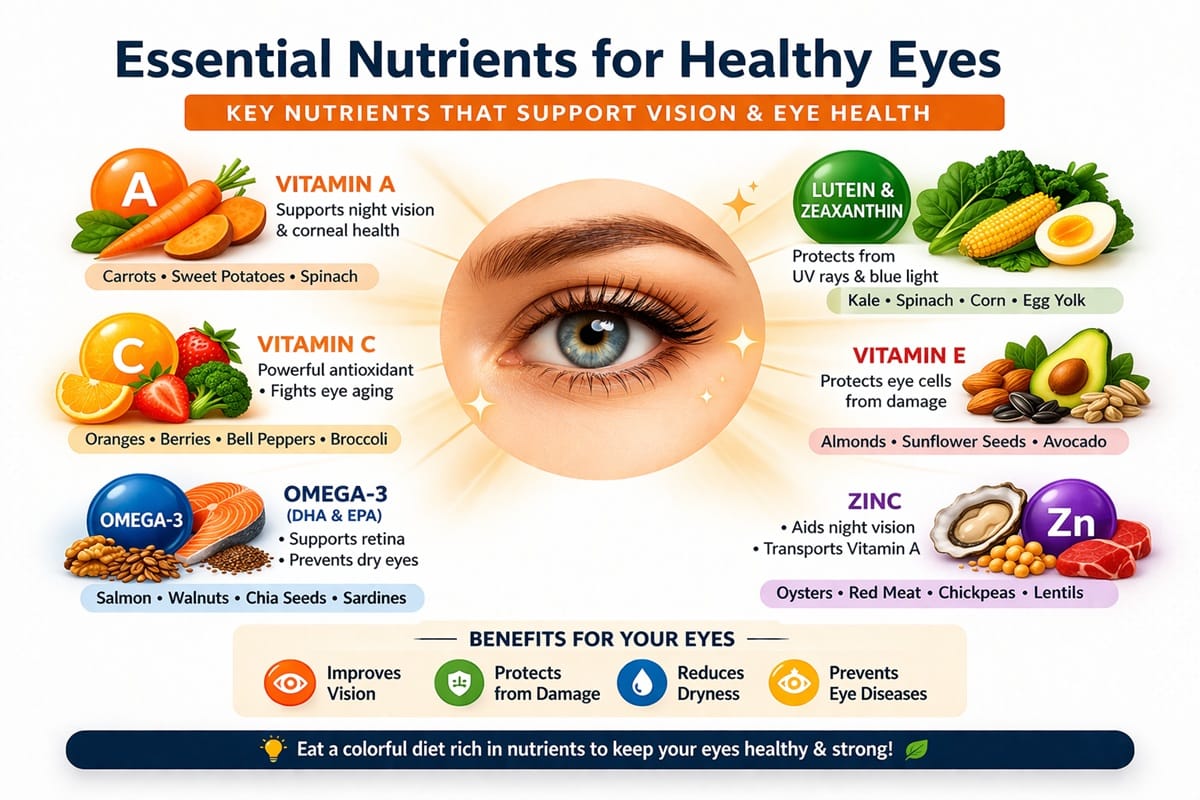
Eat a Nutrient-Rich Diet
Your eye health is directly connected to what you eat.
Focus on foods rich in:
- Vitamin A (carrots, sweet potatoes) – supports night vision
- Vitamin C & E (oranges, almonds) – protect against oxidative damage
- Omega-3 fatty acids (salmon, flaxseeds) – help prevent dry eyes
- Lutein & Zeaxanthin (leafy greens) – support retina health
👉 A balanced diet can slow down age-related vision decline.
Limit Screen Time and Adjust Your Setup
You don’t have to completely avoid screens, but you need to use them wisely.
- Keep a proper distance:
- Computer: 50-70 cm
- Phone: 30-40 cm
- Adjust brightness to match your environment
- Increase text size to reduce strain
- Blink more often to prevent dry eyes
👉 Try to avoid using devices continuously for more than 2 hours without breaks.
You may care: The Ultimate Guide to Eye Makeup Remover: 8 Ways to Avoid Dark Circles and Damage
Get Regular Eye Check-Ups
Many eye problems develop silently without obvious symptoms.
Regular eye exams can help detect conditions like glaucoma, refractive errors, or early signs of retinal damage before they become serious.
👉 Ideally, you should have your eyes checked at least once a year.
Maintain Proper Eye Hygiene
Good hygiene plays a crucial role in preventing infections.
- Wash your hands before touching your eyes
- Clean contact lenses properly and regularly
- Avoid sharing eye makeup or personal items
- Replace old or expired cosmetics
👉 If your eyes feel irritated, avoid rubbing them – use clean water or proper eye drops instead.
Get Enough Sleep
Your eyes need rest just like the rest of your body.
Lack of sleep can lead to eye strain, dryness, blurred vision, and even twitching.
👉 Aim for 7-8 hours of sleep each night to allow your eyes to recover and stay refreshed.

Stay Hydrated
Not many people realize this, but dehydration can lead to dry eyes.
Drinking enough water helps maintain proper tear production, keeping your eyes comfortable and reducing irritation.
Final Thoughts
Protecting your eyes is not about doing one big thing; it’s about doing many small things consistently.
By building these simple habits into your daily routine, you can significantly reduce the risk of eye problems and maintain clear, healthy vision for years to come.
Don’t forget to follow Easy Nice’s Instagram: @easynicelashes_official
FAQ – Eye Care and Healthy Vision
1. Can screen time permanently damage my eyes?
Not immediately, but long-term exposure can lead to eye strain, dryness, and gradual vision problems if not managed properly.
2. Is it okay to rub my eyes occasionally?
Occasional gentle rubbing is usually harmless, but frequent or forceful rubbing can damage the cornea and increase infection risk.
3. How often should I have an eye exam?
At least once a year, even if you don’t have noticeable vision problems.
4. Are blue light glasses effective?
They can help reduce eye strain from screens, but they are not a complete solution. Proper screen habits are still essential.
5. What foods are best for eye health?
Foods rich in Vitamin A, C, E, lutein, and Omega-3, such as carrots, fish, eggs, and leafy greens, are excellent for maintaining healthy eyes.
6. Can I wear contact lenses all day?
It’s recommended to wear them for no more than 8-12 hours and never while sleeping.
